15 Best Places to Visit in Nigeria for an Unforgettable Trip
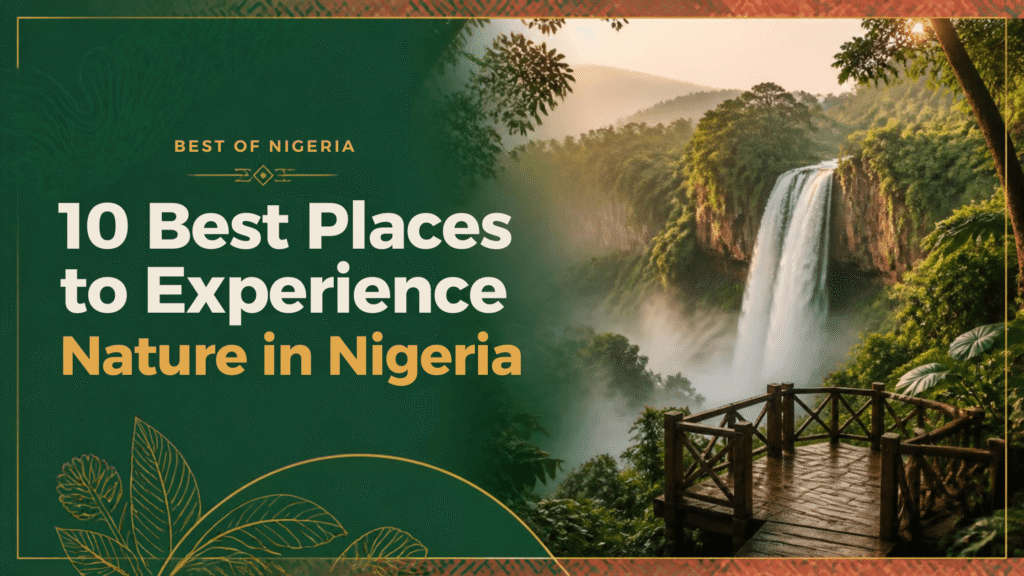
Nigeria is much bigger than the places most visitors already know.
There are mountains where the air feels different, ancient cities with centuries of history, rainforests filled with wildlife, waterfalls hidden beyond forest trails, beaches along the Atlantic coast and cities where food, music and culture continue long after sunset.
For a country as large and diverse as Nigeria, planning a trip is less about seeing everything and more about deciding what kind of experience you want.
Do you want nature? History? Adventure? Culture? Food? Beaches? Or a combination of all of them?
Here are 15 destinations to put on your Nigerian travel list in 2026.
1. Lagos
If you want to understand contemporary Nigeria, start with Lagos.
Nigeria’s commercial capital is one of the country’s most energetic destinations, combining beaches, nightlife, food, fashion, art, music, history and business in one sprawling metropolis.
Spend time around Victoria Island and Ikoyi for restaurants, galleries and nightlife. Explore Lagos Island and its historic landmarks. Visit markets, beaches and cultural institutions. Head towards Lekki for a different side of the city, or make the journey west to Badagry for a deeper historical experience.
Lagos is not necessarily a relaxing destination. It is a city that rewards curiosity.
And that is precisely why it belongs on any serious Nigerian travel itinerary.
Go for: Food, nightlife, beaches, fashion, music, art, shopping and contemporary Nigerian culture.
2. Obudu, Cross River State
High in the mountains of Cross River State, Obudu offers one of Nigeria’s most distinctive landscapes.
The area is known for its highland scenery, cool climate, rolling green hills and mountain views. The wider Obudu area also offers attractions including the Obudu Dam, Kabor-Ungwa Mountain, historic sites and spectacular viewpoints.
The famous Obudu Mountain Resort is undergoing a major rehabilitation and repositioning programme in 2026, including plans to restore and modernise its infrastructure and iconic cable car.
That means travellers should check current access and accommodation arrangements before planning a visit specifically around the resort.
Even beyond the resort itself, Obudu remains a destination for travellers who want mountains, fresh air and a very different Nigerian landscape.
Go for: Mountains, cool weather, hiking, scenery, adventure and photography.
3. Osogbo, Osun State
Osogbo offers one of the most important cultural experiences in southwestern Nigeria.
At its heart is the Osun-Osogbo Sacred Grove, a UNESCO World Heritage Site and one of the last surviving large sacred groves associated with Yoruba traditional religion.
The forest contains shrines, sculptures, sanctuaries and artworks connected to Osun, the Yoruba deity associated with the river and fertility. It is also a living religious site rather than simply a historical monument.
The annual Osun-Osogbo Festival brings the city even more attention, but the grove can be experienced outside the festival period as part of a wider Osogbo cultural trip.
Add local food, art spaces and other heritage sites around the city to turn the visit into more than a single attraction.
Go for: Yoruba culture, heritage, art, spirituality and history.
4. Idanre, Ondo State
Idanre is the kind of destination that makes you wonder why more people do not talk about Nigerian mountain landscapes.
The Idanre Hills rise dramatically above the town, with a climb involving hundreds of steps before visitors reach the historic settlement and viewpoints above.
The attraction combines nature and history. Along the route are landmarks associated with the old settlement, including Owa’s Palace, an ancient court and the famous Agboogun footprint.
Idanre is also on Nigeria’s UNESCO Tentative List, although it is not currently a UNESCO World Heritage Site.
The surrounding Ondo landscape provides additional opportunities for nature and cultural tourism, making Idanre suitable for a weekend rather than merely a quick stop.
Go for: Mountain views, hiking, history, photography and Yoruba heritage.
5. Calabar, Cross River State
Calabar has a different rhythm from many Nigerian cities.
The Cross River capital combines colonial history, Efik culture, food, waterways, museums and tourism infrastructure.
Visitors can explore the Old Residency and Slave History Museum, take boat trips, visit Marina Resort and explore attractions around the city. Cross River National Park and other rainforest destinations are also within the wider region.
Then there is the Calabar Festival, which transforms the city during its annual December celebrations.
Calabar works particularly well for travellers who want culture and nature in the same trip.
Go for: Culture, history, festivals, food, rainforest experiences and waterfront activities.
6. Jos, Plateau State
Jos offers a very different landscape from the tropical cities of southern Nigeria.
Located on the Jos Plateau, the city is surrounded by hills, rocks, waterfalls and cooler highland scenery.
The wider Plateau region includes attractions such as Shere Hills, Wase Rock, Riyom Rock, Assop Falls and Kurra Falls.
Jos also has a strong history of arts, crafts and cultural diversity, making it more than a nature destination.
A trip can combine outdoor exploration with museums, local food and time in the city.
Go for: Cool weather, hills, waterfalls, rock formations, culture and outdoor adventures.
7. Badagry, Lagos State
Badagry is one of Nigeria’s most important historical destinations.
Located along the coast west of Lagos, the town sits between the Atlantic Ocean and lagoon environments and has a deep history connected to early Christianity, the transatlantic slave trade and Nigeria’s colonial-era development.
Visitors can explore historic buildings, museums, heritage sites and coastal landscapes.
Badagry’s appeal has also expanded beyond its history. Its beaches, waterways, local culture and traditional festivals offer other reasons to visit.
For Lagos residents, it is also one of the easier destinations for a history-focused weekend trip.
Go for: History, heritage, beaches, waterways, museums and culture.
8. Ogbunike Caves, Anambra State
Ogbunike Caves offer one of southeastern Nigeria’s most unusual natural experiences.
The cave system sits within a tropical forest landscape and is reached through a long descent into the valley.
The UNESCO Tentative List describes the site as a cave complex situated beneath the surrounding hills, with a walkway of roughly 317 steps leading towards the caves.
The experience is less about polished tourism infrastructure and more about entering a natural environment with geological, cultural and spiritual significance.
In 2026, the Anambra State Government announced plans to further develop Ogbunike Cave and nearby Agulu Lake as major tourism destinations.
Go for: Caves, nature, adventure, photography and southeastern Nigerian culture.
9. Gashaka-Gumti National Park
For serious nature and adventure travellers, Gashaka-Gumti is one of Nigeria’s most remarkable destinations.
Spanning parts of Adamawa and Taraba states, the park covers more than 6,700 square kilometres and includes mountainous terrain, forests, rivers and varied ecosystems.
It is Nigeria’s largest national park and reaches towards the Mambilla Plateau and the country’s mountainous northeastern landscape.
The park is particularly suited to travellers who want something more adventurous than a conventional sightseeing holiday.
It is also one of the Nigerian natural sites currently included on UNESCO’s Tentative List.
Because of its remote character, travel arrangements and local guidance should be organised carefully before setting out.
Go for: Wildlife, hiking, mountains, forests, birdwatching and serious outdoor adventure.
10. Yankari Game Reserve, Bauchi State
Yankari remains one of Nigeria’s best-known wildlife destinations.
The reserve is famous for its elephants, wildlife, warm springs and savannah environment, giving visitors an opportunity to experience a very different side of the country.
One important detail is often misunderstood: Yankari is a game reserve, not currently a national park. The Nigeria National Park Service records that it was delisted as a national park in 2006.
The reserve’s warm springs also add a leisure element to the trip, making Yankari suitable for visitors who want to combine wildlife with relaxation.
Go for: Wildlife, elephants, nature, warm springs and outdoor experiences.
11. Abeokuta, Ogun State
Abeokuta is one of the easiest destinations to combine history, food, culture and adventure.
The city’s defining landmark is Olumo Rock, a huge granite formation that rises above the surrounding landscape.
But the rock is only part of the experience.
Visitors can explore the city’s history, visit the Itoku Adire Market, discover traditional textile production and experience the food and architecture of Ogun State.
Abeokuta is close enough to Lagos for a day trip but interesting enough to justify an overnight stay.
Go for: Olumo Rock, Adire, history, food, culture and weekend escapes.
12. Enugu
Enugu is a strong choice for travellers who want to combine city exploration with nature.
Known historically as the Coal City, Enugu sits amid a landscape of hills, forests and waterfalls.
The wider state has attractions including Awhum Waterfall, Ngwo Pine Forest and the historic Nsude Pyramids.
The state government has been developing several of these sites as part of a broader tourism programme, including an eco-tourism resort around Awhum Waterfall and adventure infrastructure around Ngwo Pine Forest.
That combination of urban comfort and nearby natural attractions makes Enugu particularly useful as a base for exploring southeastern Nigeria.
Go for: Waterfalls, hills, history, food, nature and southeastern culture.
13. Kano
Kano offers one of the strongest windows into northern Nigeria’s history and commercial heritage.
The ancient city has long been associated with trade, crafts and Islamic scholarship, and its historic landscape includes the ancient city walls, Dala Hill, Kurmi Market and the Emir’s Palace.
The ancient Kano city walls and associated sites are on UNESCO’s Tentative List.
A visit here is about more than ticking off monuments. It is an opportunity to experience northern Nigerian architecture, textiles, markets, cuisine and urban history.
Travellers should check current local conditions and travel advisories before planning a trip, as conditions can vary by location and over time.
Go for: History, architecture, markets, textiles, northern Nigerian food and culture.
14. Nike Art Gallery and the Lagos Art Scene
Nigeria’s contemporary art story is impossible to discuss without spending time in Lagos.
Nike Art Gallery is one of the city’s best-known places to encounter Nigerian and African visual art, with a large collection spanning painting, sculpture, textiles, beadwork and other forms of creative expression.
But the gallery is only a starting point.
A broader Lagos art itinerary can include galleries, artist studios, cultural spaces and contemporary art events across Lekki, Victoria Island, Ikoyi and other parts of the city.
For visitors who want to understand modern Nigerian creativity, this can be as memorable as visiting a national monument.
Go for: Art, design, textiles, Nigerian creativity and contemporary culture.
15. Mambilla Plateau, Taraba State
For travellers looking for a Nigerian landscape that feels completely different from the country’s major cities, the Mambilla Plateau deserves serious consideration.
The plateau around Gembu sits at high elevation and is known for its cooler climate, green hills, tea-growing landscapes and mountain scenery.
Its location near Gashaka-Gumti National Park also makes it possible to combine a plateau experience with a larger nature-focused journey through Taraba.
The destination is particularly attractive to travellers who prefer scenic road trips, hiking and less conventional tourist routes.
Go for: Mountain scenery, cool weather, road trips, nature and adventure.
How to Choose Your Nigerian Destination
Not every destination suits every kind of traveller.
For nature and adventure
Consider Gashaka-Gumti, Obudu, Mambilla Plateau, Jos and Ogbunike Caves.
These destinations offer mountains, forests, waterfalls, caves, wildlife or dramatic landscapes.
For history and heritage
Look towards Osogbo, Badagry, Kano, Abeokuta and Calabar.
These places offer different windows into Nigeria’s religious, cultural, colonial, commercial and political history.
For culture and creativity
Lagos, Osogbo, Calabar, Kano and Abeokuta provide particularly strong opportunities to experience Nigerian food, art, music, festivals, crafts and traditional culture.
For a weekend from Lagos
Abeokuta, Badagry and Osogbo are among the more practical options, depending on how much time you have.
For a longer Nigerian adventure
A multi-destination itinerary can combine very different experiences.
For example:
Lagos → Abeokuta → Osogbo → Idanre
gives you cities, food, crafts, heritage and mountains.
Another route could be:
Calabar → Obudu → Gashaka-Gumti
for a trip built around rainforest, mountains, wildlife and outdoor experiences.
When Is the Best Time to Travel Around Nigeria?
Nigeria has different climate patterns across its regions, so there is no single perfect month for every destination.
For many outdoor trips in southern Nigeria, the drier months can make hiking and road travel easier. Northern destinations can be more comfortable during cooler periods, while waterfalls and some natural attractions can change considerably depending on rainfall.
If a trip revolves around a specific festival, the festival calendar should determine your dates.
And before travelling to remote areas, check current road conditions, accommodation availability, local access requirements and security guidance.
Nigeria Is More Than a Few Famous Destinations
One of the most interesting things about travelling around Nigeria is how quickly the landscape changes.
You can leave the energy of Lagos and reach the historic streets of Abeokuta. You can climb the hills of Idanre, walk through a sacred forest in Osogbo, explore caves in Anambra or wake up among the mountains of Cross River.
The country’s diversity is not just geographical.
It is reflected in the food, languages, architecture, festivals, clothing, music, religious traditions, art and everyday life you encounter from one region to another.
That is what makes travelling through Nigeria memorable.
You are not simply moving from one attraction to another.
You are moving between different expressions of the country.
Final Thoughts
Nigeria rewards travellers who are willing to go beyond the obvious.
Lagos may introduce you to the country’s modern energy. Abeokuta can take you into its history. Osogbo opens a door into Yoruba cultural heritage. Calabar connects rainforest, history and festivals. Obudu and Mambilla reveal a mountainous side of Nigeria that many first-time visitors never expect.
There is no single way to experience the country.
Pick a region. Give yourself enough time. Eat the local food. Talk to people. Learn the story behind the places you visit.
And leave some room for the unexpected.
That is often where the most memorable Nigerian travel stories begin.
