In-Demand Digital Skills Nigerians Can Learn for Better Career Opportunities
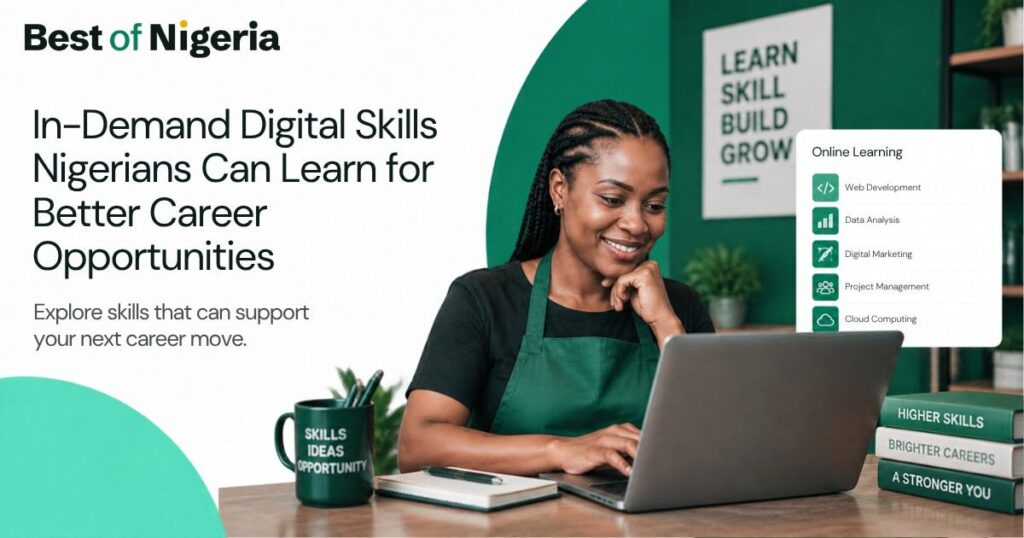
The world of work is changing, and digital technology is creating new career opportunities for people with the right skills.
From businesses looking for professionals to manage their online presence to international companies hiring remote workers, digital skills have become increasingly valuable across different industries.
For Nigerians, this presents an opportunity to access career paths beyond traditional employment. With the right skills, you can work for Nigerian companies, secure remote jobs with international organisations, freelance for clients abroad or build your own digital business.
One interesting thing about digital skills is that you do not necessarily need a university degree in computer science or information technology to get started. Many can be learned through online courses, practical projects, mentorship and consistent practice.
However, choosing the right skill is important. Some digital skills are more technical, while others focus on creativity, communication, business operations and problem-solving.
Whether you are a student, graduate, job seeker, entrepreneur or professional looking to change careers, here are 15 in-demand digital skills Nigerians can learn to improve their career opportunities.
1. Software Development and Programming
Software development is one of the most valuable digital skills to consider if you are interested in building technology products and applications.
Software developers create websites, mobile applications, business software, ecommerce platforms and other digital solutions used by individuals and organisations.
As businesses continue to adopt digital tools, there is a need for professionals who can build, maintain and improve software systems.
Some areas you can specialise in include:
- Frontend development.
- Backend development.
- Full-stack development.
- Mobile application development.
- API development.
- Software testing.
Popular programming languages and technologies include JavaScript, Python, PHP, Java, React, Laravel and Flutter.
Career opportunities: Software developer, frontend developer, backend developer, mobile app developer and freelance software engineer.
Where to learn: freeCodeCamp, The Odin Project, Coursera and Udemy.
Website: https://www.freecodecamp.org/
2. Data Analysis
Businesses collect large amounts of information from customers, sales, marketing campaigns and everyday operations.
However, data becomes valuable when someone can interpret it and turn it into useful business insights.
Data analysis involves collecting, cleaning, examining and interpreting information to help organisations make better decisions.
For example, a retail company may use data analysis to understand which products sell the most, identify customer purchasing patterns and determine when to restock inventory.
Important tools to learn include:
- Microsoft Excel.
- SQL.
- Power BI.
- Tableau.
- Python.
- Google Sheets.
You do not necessarily need to master every tool before starting. Excel and SQL provide a useful foundation for beginners.
Career opportunities: Data analyst, business intelligence analyst, reporting analyst and operations analyst.
Where to learn: Microsoft Learn, Google Career Certificates, DataCamp and Coursera.
Website: https://learn.microsoft.com/en-us/training/
3. Digital Marketing
Digital marketing involves using online channels to promote businesses, attract customers and generate sales.
As more Nigerian businesses establish an online presence, there is a growing need for professionals who understand how to reach customers through digital platforms.
Digital marketing is a broad field that includes several specialised skills:
- Search engine optimisation (SEO).
- Social media marketing.
- Email marketing.
- Content marketing.
- Paid advertising.
- Conversion rate optimisation.
- Marketing analytics.
For example, an SEO specialist helps businesses improve their visibility on Google, while a paid advertising specialist manages campaigns designed to generate leads or sales.
One advantage of digital marketing is that you can start by specialising in one area before expanding into other services.
Career opportunities: Digital marketing specialist, SEO specialist, social media manager, performance marketer, email marketing specialist and content strategist.
Where to learn: Google Skillshop, HubSpot Academy and Meta Blueprint.
Website: https://skillshop.withgoogle.com/
4. UI/UX Design
User interface (UI) and user experience (UX) design are important parts of building websites, mobile applications and digital products.
UI design focuses on how a digital product looks, including its colours, typography, buttons, layouts and visual elements.
UX design focuses on how people interact with a product and whether they can complete tasks easily.
For example, when designing a banking application, a UI/UX designer considers how customers navigate the application, transfer money, view transactions and access different features.
Some important tools include:
- Figma.
- Adobe XD.
- FigJam.
- Miro.
You should also learn design principles, user research, wireframing, prototyping and usability testing.
Career opportunities: UI designer, UX designer, product designer and UX researcher.
Where to learn: Figma Learn, Interaction Design Foundation and Coursera.
Website: https://www.figma.com/resource-library/
5. Cybersecurity
As businesses, financial institutions and government organisations increasingly depend on digital systems, protecting information and technology infrastructure has become important.
Cybersecurity involves identifying security threats, protecting computer systems, monitoring suspicious activities and preventing unauthorised access to sensitive information.
It is a specialised field with several career paths, including:
- Security operations.
- Network security.
- Cloud security.
- Digital forensics.
- Penetration testing.
- Governance, risk and compliance.
Beginners should first understand networking, operating systems, basic programming and information security principles.
You can then progress into more specialised cybersecurity areas through practical training and recognised certifications.
Career opportunities: Cybersecurity analyst, security engineer, security operations centre analyst and information security specialist.
Where to learn: Cisco Networking Academy, Google Cybersecurity Certificate and TryHackMe.
Website: https://skillsforall.com/
6. Cloud Computing
Cloud computing allows businesses to store data, run applications and access computing resources over the internet instead of relying entirely on physical infrastructure.
Many organisations use cloud services to manage their websites, databases, software applications and business operations.
Some major cloud platforms include:
- Amazon Web Services (AWS).
- Microsoft Azure.
- Google Cloud.
Cloud computing has different specialisations, such as cloud administration, cloud engineering, cloud architecture and cloud security.
You can start by understanding networking, operating systems, databases and basic cloud infrastructure before moving into advanced areas.
Career opportunities: Cloud engineer, cloud administrator, cloud architect and cloud support specialist.
Where to learn: AWS Skill Builder, Microsoft Learn and Google Cloud Skills Boost.
Website: https://skillbuilder.aws/
7. Artificial Intelligence and Machine Learning
Artificial intelligence (AI) is changing how businesses develop products, automate processes and interact with customers.
Machine learning, a specialised area of AI, involves developing systems that learn patterns from data and use them to make predictions or decisions.
You can approach this field from different directions.
For example, you can learn to use existing AI tools to improve business productivity, or develop the technical knowledge required to build AI-powered applications.
Some important areas include:
- AI application development.
- Machine learning.
- Natural language processing.
- AI automation.
- Generative AI.
- AI data engineering.
For beginners, learning Python, mathematics, data analysis and basic programming provides a useful foundation for more technical AI careers.
Career opportunities: AI developer, machine learning engineer, AI automation specialist and AI solutions consultant.
Where to learn: Google AI courses, DeepLearning.AI and Microsoft Learn.
Website: https://www.deeplearning.ai/
8. Video Editing and Motion Graphics
Video has become one of the most important formats for digital communication, marketing and entertainment.
Businesses, content creators, media companies and organisations need people who can turn raw footage into engaging videos for different platforms.
Video editing involves selecting footage, arranging scenes, improving audio, adding transitions and creating a finished production.
Motion graphics takes things further by introducing animation, moving text, visual effects and other graphic elements.
Some popular tools include:
- Adobe Premiere Pro.
- DaVinci Resolve.
- CapCut.
- Adobe After Effects.
- Final Cut Pro.
You can begin with short-form videos for TikTok, Instagram Reels and YouTube Shorts before moving into documentaries, advertisements and longer productions.
Career opportunities: Video editor, motion graphics designer, social media video producer and freelance video creator.
Where to learn: Blackmagic Design Training, Adobe tutorials and YouTube.
Website: https://www.blackmagicdesign.com/products/davinciresolve/training
9. Graphic Design and Visual Communication
Graphic design is the skill of communicating ideas through visual elements.
Businesses need graphic designers to create advertisements, social media content, logos, product packaging, presentations and marketing materials.
It is a useful skill for people who enjoy creativity and visual problem-solving.
Some important tools include:
- Adobe Photoshop.
- Adobe Illustrator.
- Canva.
- CorelDRAW.
- Affinity Designer.
Beyond learning the software, you should understand typography, colour theory, layout, visual hierarchy and branding.
A good portfolio is particularly important when looking for clients or employment.
Career opportunities: Graphic designer, brand identity designer, visual communication specialist and creative designer.
Where to learn: Canva Design School, Adobe Learn and Coursera.
Website: https://www.canva.com/designschool/
10. Search Engine Optimisation (SEO)
Search engine optimisation involves improving websites so that their pages can appear more prominently in relevant search engine results.
Businesses depend on search engines to attract people looking for products, services, information and solutions.
An SEO professional helps businesses improve their organic search visibility through technical improvements, content optimisation and authority building.
Important areas to learn include:
- Keyword research.
- On-page SEO.
- Technical SEO.
- Content strategy.
- Link building.
- Website performance.
- Search analytics.
You should also become familiar with tools such as Google Search Console, Google Analytics, Ahrefs and Semrush.
SEO can be particularly valuable for professionals interested in working with ecommerce businesses, media companies, digital agencies and international clients.
Career opportunities: SEO specialist, technical SEO consultant, SEO content strategist and organic growth specialist.
Where to learn: Google Search Central, Ahrefs Academy and Semrush Academy.
Website: https://developers.google.com/search
11. Product Management
Product management involves identifying customer needs, defining product direction and coordinating the development of products that solve real problems.
A product manager works with designers, developers, marketers and other stakeholders to ensure that a product delivers value to its intended users.
For example, a product manager working on a fintech application may be responsible for understanding customer problems, prioritising new features and coordinating the teams responsible for building them.
Important skills include:
- Market research.
- Product strategy.
- User research.
- Project prioritisation.
- Product analytics.
- Communication and leadership.
- Agile methodologies.
You do not necessarily need to be a software developer to become a product manager, although understanding technology and how digital products are built is useful.
Career opportunities: Product manager, associate product manager, product analyst and product operations specialist.
Where to learn: Product School, Coursera and Atlassian University.
Website: https://www.atlassian.com/agile/product-management
12. Cloud-Based Bookkeeping and Accounting Software
Businesses need accurate financial records to understand their income, expenses, cash flow and profitability.
Digital bookkeeping involves using software to record and organise financial transactions instead of relying entirely on manual records.
Some popular tools include:
- QuickBooks.
- Xero.
- Zoho Books.
- Sage Accounting.
You should understand basic accounting principles, invoicing, bank reconciliation, expense tracking and financial reporting.
This skill can be useful for small businesses that need bookkeeping support but cannot afford to employ full-time accounting staff.
Career opportunities: Bookkeeper, accounts assistant, virtual bookkeeper and finance operations specialist.
Where to learn: QuickBooks Online training, Xero Central and Zoho Books resources.
Website: https://quickbooks.intuit.com/accountants/training-certification/
13. Content Writing and Copywriting
Businesses need written content to communicate with customers, promote products, educate audiences and generate sales.
Content writing focuses on producing useful information for audiences, while copywriting focuses more directly on persuading readers to take specific actions.
Some opportunities within this field include:
- Blog writing.
- Website content writing.
- SEO writing.
- Email copywriting.
- Sales page writing.
- Social media copywriting.
- Scriptwriting.
You should learn how to research topics, structure information, understand audiences and write clearly.
AI tools can help with research and productivity, but strong writing, original thinking, fact-checking and the ability to communicate a brand’s value remain important.
Career opportunities: Content writer, copywriter, SEO writer, content strategist and email marketing writer.
Where to learn: HubSpot Academy, Coursera and Copyblogger.
Website: https://academy.hubspot.com/
14. Virtual Assistance and Remote Business Operations
Virtual assistance involves providing administrative and operational support to businesses and professionals remotely.
It is a useful career path for people who are organised, communicate well and can manage business tasks using digital tools.
Some common responsibilities include:
- Managing emails.
- Scheduling appointments.
- Preparing documents.
- Managing calendars.
- Conducting online research.
- Updating customer databases.
- Coordinating meetings.
- Managing basic customer support.
You should become comfortable using tools such as Google Workspace, Microsoft Office, Slack, Notion, Trello and project management applications.
As you gain experience, you can specialise in executive assistance, ecommerce operations, customer support or project coordination.
Career opportunities: Virtual assistant, executive assistant, operations assistant, administrative coordinator and remote customer support specialist.
Where to learn: Google Workspace Learning Centre, HubSpot Academy and LinkedIn Learning.
Website: https://workspace.google.com/learning-center/
15. No-Code Development and Automation
Not every business problem requires a traditional software development project.
No-code tools allow people to build websites, applications, databases and automated workflows using visual interfaces and minimal programming.
This is particularly useful for entrepreneurs and businesses that want to automate repetitive processes without building everything from scratch.
Some popular tools include:
- Webflow.
- Bubble.
- Airtable.
- Zapier.
- Make.
- Softr.
For example, you could build a customer registration system, automate email notifications, connect business applications or create a simple internal management platform.
Understanding business processes is just as important as learning the tools because the objective is to solve operational problems.
Career opportunities: No-code developer, automation specialist, workflow consultant and business systems specialist.
Where to learn: Bubble Academy, Webflow University and Zapier Learn.
Website: https://university.webflow.com/
How Much Does It Cost to Learn Digital Skills in Nigeria?
One advantage of learning digital skills is that you can access a considerable amount of educational material online without paying for expensive classroom programmes.
Some platforms provide free courses, while others offer paid certificates, specialised training and mentorship.
Your actual learning costs will depend on the skill you choose, the equipment you already have and whether you want formal certification.
| Learning resource | What it offers |
|---|---|
| freeCodeCamp | Free programming education |
| Google Skillshop | Digital marketing and Google tools training |
| Microsoft Learn | Technology, cloud and data training |
| HubSpot Academy | Marketing, sales and content courses |
| Coursera | Professional courses and certificates |
| Cisco Networking Academy | Networking and cybersecurity education |
| YouTube | Free tutorials across different digital skills |
| Udemy | Affordable paid courses across multiple subjects |
You should also budget for internet access, a suitable device and practical learning resources.
A certificate can be useful, but employers and clients will often want evidence that you can actually perform the work.
Where Can Nigerians Find Jobs After Learning Digital Skills?
Learning a digital skill is only the first step. You also need to know where to find opportunities to apply it.
Fortunately, there are several ways to turn your skills into employment or income.
1. Nigerian Job Platforms
You can search for digital and technology-related opportunities on Nigerian recruitment platforms.
Some websites to explore include:
- Jobberman: https://www.jobberman.com/
- MyJobMag: https://www.myjobmag.com/
- Hot Nigerian Jobs: https://www.hotnigerianjobs.com/
Look for positions that match your skill level and experience.
2. International Freelance Platforms
Freelancing allows you to offer services to clients without necessarily working as a permanent employee.
Some platforms to explore include:
- Upwork: https://www.upwork.com/
- Fiverr: https://www.fiverr.com/
- Freelancer: https://www.freelancer.com/
- PeoplePerHour: https://www.peopleperhour.com/
Competition can be high, so focus on building a strong portfolio and developing a clear service offering rather than simply creating accounts on multiple platforms.
3. Remote Job Platforms
If you want to work for international companies, explore platforms that advertise remote opportunities.
Examples include:
- Remote OK: https://remoteok.com/
- We Work Remotely: https://weworkremotely.com/
- Wellfound: https://wellfound.com/
- LinkedIn Jobs: https://www.linkedin.com/jobs/
Check whether individual employers accept applicants based in Nigeria, as some remote positions are restricted to particular countries or time zones.
4. Direct Outreach to Businesses
You do not have to wait for companies to advertise vacancies.
You can identify businesses that need your skills and contact them directly with a clear proposal.
For example, a graphic designer can approach businesses with outdated branding, while an SEO specialist can identify websites with search visibility problems and propose improvements.
A good portfolio and a personalised pitch can help you stand out.
5. Build Your Own Business
Some digital skills can become the foundation of an independent business.
For example, you can establish a digital marketing agency, website development company, content production business or automation consultancy.
Instead of relying entirely on employment opportunities, you can build relationships with customers and generate revenue by providing solutions to their problems.
7 Tips for Learning a Digital Skill and Getting Your First Opportunity
Learning a digital skill requires more than watching tutorials and collecting certificates. You need to develop the ability to apply what you learn.
Here are some practical recommendations.
1. Choose One Skill and Focus on It
Avoid trying to learn programming, graphic design, digital marketing, data analysis and video editing simultaneously.
Choose one skill based on your interests, existing abilities and career goals.
Once you become competent, you can learn complementary skills.
2. Learn Through Practical Projects
Do not spend months consuming educational content without producing anything.
If you are learning web development, build websites. If you are learning graphic design, create designs. If you are learning data analysis, work with real datasets.
Practical experience helps you understand how your skills work outside the classroom.
3. Build a Portfolio
Your portfolio should demonstrate what you can do.
It could contain websites you have developed, marketing campaigns you have managed, designs you have created, reports you have analysed or videos you have edited.
You can start with personal projects and clearly label them as sample or practice work.
4. Develop Communication Skills
Technical ability is important, but you also need to communicate effectively with employers, colleagues and clients.
Learn how to explain your work, ask useful questions, provide updates and handle feedback.
These skills become particularly important when working remotely.
5. Understand How Businesses Make Money
One way to become more valuable is to understand how your skill contributes to business results.
For example, a digital marketer should understand customer acquisition, while a data analyst should understand how reports support business decisions.
The ability to connect your work to business outcomes can distinguish you from people who only know how to operate software.
6. Keep Improving Your Skills
Technology changes quickly. Tools that are popular today may become less relevant as new solutions emerge.
Follow industry developments, participate in professional communities and keep updating your knowledge.
7. Start Looking for Opportunities Before You Feel Completely Ready
You do not have to become an expert before applying for entry-level opportunities.
Once you have developed basic competence and completed some practical projects, begin applying for internships, junior roles, freelance projects and volunteer opportunities that can provide relevant experience.
Be honest about your experience and continue improving as you work.
Final Thoughts
Digital skills are creating new opportunities for Nigerians to participate in the global economy, work remotely, build businesses and develop careers beyond traditional employment paths.
From software development and cybersecurity to digital marketing, content creation, data analysis and virtual assistance, there are several directions you can explore depending on your interests and strengths.
However, the most important thing is not to learn every digital skill that becomes popular.
Choose one that solves a real problem, invest time in developing practical competence and build evidence of what you can do.
You can start with free learning resources, practise using real projects and gradually pursue opportunities with Nigerian and international businesses.
In an increasingly digital economy, what you know matters, but your ability to turn that knowledge into something useful is what creates opportunities.

Best of Nigeria Editorial Team
The Best of Nigeria Editorial Team shares stories, insights, guides, and features celebrating Nigeria’s people, businesses, culture, destinations, and opportunities. Through informative articles and carefully curated content, we help readers discover the people, ideas, and organisations shaping Nigeria’s story.