10 Nigerian Fashion Brands Putting Local Design on the Global Map
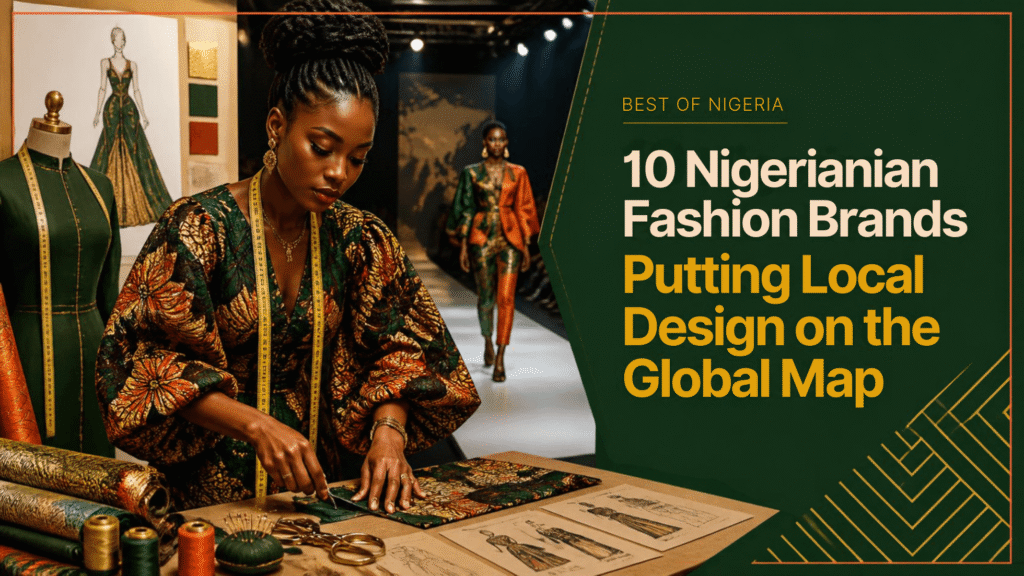
Nigerian fashion has never been short of creativity.
What has changed is how far that creativity is travelling.
Designers working from Lagos and other Nigerian creative centres are increasingly appearing on international fashion calendars, working with local artisans, reinterpreting traditional textiles and building brands that can speak to customers far beyond Nigeria.
Aso-oke is becoming a contemporary luxury material. Adire is being reworked for modern wardrobes. Traditional weaving and dyeing techniques are appearing alongside tailoring, knitwear and experimental silhouettes. And Nigerian designers are increasingly presenting their work in cities such as Berlin, Copenhagen, London, Paris and New York.
The significance goes beyond fashion.
Every time a Nigerian designer takes a local textile, technique, story or aesthetic and turns it into a product that can travel internationally, they expand the idea of what Nigerian design can be.
Here are 10 Nigerian fashion brands helping make that happen in 2026.
1. Orange Culture
Few Nigerian fashion labels have spent as much time building an international identity as Orange Culture.
Founded by Adebayo Oke-Lawal in Lagos in 2011, the brand combines Nigerian and wider African references with contemporary silhouettes, tailoring, colour and expressive storytelling.
It has also consistently challenged conventional ideas about gender and menswear, creating pieces that can move between traditionally masculine and feminine codes.
That approach has taken Orange Culture well beyond Nigeria.
The brand was a semi-finalist for the LVMH Prize and has appeared on international fashion platforms. In 2026, it presented its Fall collection in Berlin, following its return to the city’s fashion-week schedule.
What makes the current chapter particularly interesting is that the international expansion has not required the brand to detach itself from Lagos.
Vogue reported that Orange Culture’s Fall 2026 collection was made in Nigeria using locally sourced fabrics and local artisans. The brand’s Berlin presentation therefore became another example of Nigerian production travelling with the design.
What to know: Contemporary Nigerian fashion, gender-fluid design, tailoring and Lagos-based production.
2. Kenneth Ize
Kenneth Ize has built much of his design language around one of Nigeria’s most recognisable textiles: aso-oke.
Rather than treating the handwoven Yoruba textile as something reserved for traditional occasions, Ize has incorporated it into contemporary tailoring, coats, trousers, dresses and other modern silhouettes.
His work has attracted major international attention, including appearances on international fashion calendars and recognition from global fashion institutions.
In 2026, Ize presented his Fall collection in Berlin, returning to an international runway after a period away.
The collection again placed aso-oke at the centre of the conversation, with vibrant handwoven Nigerian textiles becoming part of an international fashion vocabulary.
The important part is not simply that a traditional fabric appeared on an international runway.
It is that the fabric was treated as a serious design material.
What to know: Aso-oke, contemporary tailoring, Nigerian weaving and luxury fashion.
3. Iamisigo
Iamisigo occupies a fascinating space between fashion, craft and wearable art.
Founded by Bubu Ogisi, the brand is rooted in Lagos while also working across Nairobi and Accra. Its approach centres on African textile traditions, handmade techniques and cultural storytelling.
The label has developed a reputation for working with materials and processes that are deeply connected to African craft traditions.
That has taken Iamisigo beyond Lagos.
The brand presented at Copenhagen Fashion Week for Spring/Summer 2026 after receiving the Zalando Visionary Award, while Vogue described its Lagos presentation as an expansive universe of artisanal and handcrafted goods.
Its work demonstrates another way Nigerian design can travel internationally: not by copying conventional luxury fashion structures, but by expanding the definition of what a fashion brand can be.
What to know: Textile preservation, wearable art, African craftsmanship and experimental design.
4. Lisa Folawiyo
Lisa Folawiyo has been building an international fashion business for two decades.
Founded in Lagos in 2005, the label became known for transforming Ankara and other West African textiles through hand embellishment, tailoring and contemporary silhouettes.
The result is not simply traditional African clothing.
It is a luxury fashion language built from African materials and references.
The brand has developed international retail and editorial visibility, with current industry sources documenting stockists and distribution through platforms including Selfridges and Moda Operandi.
Its international presence has also included collections and fashion activity in cities including Lagos, Johannesburg, London, Paris, Milan and New York.
That longevity is important.
The global conversation around African fashion has become considerably louder in recent years, but Lisa Folawiyo was building international connections long before the current wave of attention.
What to know: Ankara, hand embellishment, luxury fashion and long-term international retail presence.
5. Emmy Kasbit
Emmy Kasbit has built its identity around Nigerian heritage, contemporary tailoring and textiles.
Founded by Emmanuel Okoro, the label has become particularly associated with Akwete, the handwoven textile from southeastern Nigeria.
The designer’s approach is not simply to reproduce traditional clothing.
Instead, cultural references become starting points for contemporary collections.
For its Spring/Summer 2026 collection, Okoro drew inspiration from King Jaja of Opobo and travelled to the historical figure’s hometown to research his story and environment.
That approach captures something important about Nigerian fashion’s international potential.
The product is not only a garment.
It is also a story.
And Nigerian history provides an enormous archive of stories that can be translated into contemporary design.
What to know: Akwete, Nigerian history, contemporary tailoring and cultural storytelling.
6. Fruché
Fruché represents a younger generation of Nigerian labels building international visibility through a combination of craftsmanship, storytelling and contemporary design.
Founded by Frank Aghuno in Lagos, the brand works with women-led communities across Nigeria that preserve traditional techniques such as hand-dyeing and weaving.
In 2026, Fruché became one of the Nigerian labels to enter the Berlin Contemporary programme and presented its Spring/Summer 2027 collection during Berlin Fashion Week.
The collection, titled “K-LEG,” drew from Nigerian childhood memories, school uniforms, body image and ideas of imperfection.
Traditional Nigerian techniques such as aso-oke and hand-dyed textiles were incorporated into a contemporary collection.
The result shows how local craft can become part of a forward-looking fashion proposition rather than simply a reference to the past.
What to know: Nigerian craftsmanship, slow fashion, contemporary silhouettes and cultural storytelling.
7. BOYEDOE
BOYEDOE is part of a new generation of Nigerian fashion brands building international infrastructure while still developing from Lagos.
Founded by designer Aisha Obafemi-Awofeso, the label draws heavily from African culture, folklore, colour, texture and pattern.
Its international journey has accelerated in recent years.
BOYEDOE made its European debut at Portugal Fashion Week in 2023, later participated in the TRANOÏ Paris trade show and made its Paris Fashion Week main-runway debut in October 2025.
In 2025, the brand also participated in Rakuten Fashion Week TRANOÏ Tokyo.
By 2026, its international retail network included selected stockists in Ghana, Spain, Germany and the United States, alongside global online platforms.
That is an important development.
International fashion presence is not only about runway photographs.
Retail distribution is what allows a design to become a business.
What to know: Contemporary African design, international trade shows, retail expansion and Nigerian storytelling.
8. Banke Kuku
Banke Kuku has built a distinctive fashion language around prints, colour and Nigerian cultural references.
Founded by Banke Kuku, the Lagos-based brand is known for combining contemporary fashion with Nigerian-inspired textile design.
Its visual identity is immediately recognisable, but the brand’s international relevance goes beyond colourful prints.
Banke Kuku has built relationships with international customers and fashion platforms while developing its Nigerian production and design ecosystem.
The label is particularly interesting because it demonstrates how Nigerian fashion can become recognisable as a brand rather than simply being identified by a generic “African print” aesthetic.
The print becomes part of the brand’s intellectual property and storytelling.
What to know: Print design, contemporary womenswear, Nigerian production and cultural identity.
9. Andrea Iyamah
Andrea Iyamah demonstrates that Nigerian fashion does not have to be built around traditional textiles to carry a Nigerian design identity.
Founded by Nigerian designer Andrea Iyamah, the label is particularly recognised for swimwear and resortwear featuring bold colour, sculptural forms and distinctive silhouettes.
The brand has developed an international customer base and become associated with a polished approach to contemporary resort fashion.
Its success is useful to consider because it broadens the conversation around Nigerian fashion.
Global relevance does not necessarily require using aso-oke, Ankara or adire in every collection.
A Nigerian brand can compete internationally through its design language, product quality, photography, branding and understanding of a specific global customer.
What to know: Resortwear, swimwear, colour, sculptural design and international fashion.
10. Maki Oh
Maki Oh is one of the Nigerian labels that helped demonstrate that contemporary Nigerian design could enter luxury fashion conversations internationally.
Founded by Amaka Osakwe, the Lagos-based label became known for combining contemporary silhouettes with Nigerian textile techniques and handwork.
Adire has been particularly important to the brand’s identity, with traditional Yoruba resist-dyeing techniques incorporated into contemporary fashion.
The brand’s international profile grew substantially after being worn by Michelle Obama, among other high-profile figures, and through coverage in major international fashion publications.
Maki Oh’s influence is particularly important because it helped establish a visual language in which Nigerian textile traditions could exist comfortably within modern luxury fashion.
What to know: Adire, handwork, Nigerian textile traditions and luxury fashion.
What These Brands Are Doing Differently
The global story of Nigerian fashion is not simply about putting Nigerian prints on clothes.
Something more interesting is happening.
Nigerian textiles are becoming design materials
Aso-oke, adire and Akwete are increasingly being treated as materials with design potential rather than fabrics restricted to traditional occasions.
Designers are cutting, weaving, dyeing, embellishing and restructuring them into modern garments.
That changes the conversation from “African-inspired fashion” to specific Nigerian design traditions.
Local artisans are becoming part of the global story
Many Nigerian labels rely on local weavers, dyers, embroiderers, tailors and other craftspeople.
This means international fashion visibility can potentially create value further down the production chain.
Orange Culture’s 2026 Berlin collection, for example, was made in Nigeria with locally sourced fabrics and local artisans. Fruché similarly works with Nigerian communities preserving traditional techniques.
Lagos is becoming a fashion production and cultural hub
Lagos is not merely where these brands happen to have their headquarters.
It influences the clothes.
The city’s energy, architecture, nightlife, music, social life, colour and contradictions frequently appear in Nigerian designers’ visual language.
That gives the fashion a sense of place that is difficult to reproduce elsewhere.
Nigerian designers are building international infrastructure
The next stage of global fashion recognition is not simply appearing in Vogue or walking a runway.
It is finding customers.
International stockists, showrooms, e-commerce, trade shows, buyers and repeat customers are what turn creative recognition into a sustainable fashion business.
BOYEDOE’s international stockists and Lisa Folawiyo’s long-running international retail presence demonstrate why distribution matters alongside design.
Why Nigerian Fashion Matters Beyond Clothing
Fashion is one of the clearest ways a country can export culture without exporting a physical piece of land.
A textile can carry history.
A silhouette can reference a ceremony.
A print can preserve a visual language.
A garment can tell the story of a city.
And a designer can introduce an international customer to something they might never encounter otherwise.
That is why the rise of Nigerian fashion matters beyond the runway.
When aso-oke appears in Berlin, adire is reinterpreted for a contemporary wardrobe, or Nigerian artisans contribute to a collection sold internationally, the product is carrying part of Nigeria with it.
The Challenges Behind the Global Ambition
International visibility does not automatically mean a fashion business has become financially secure.
Nigerian designers continue to operate in an environment where production costs, access to capital, logistics, infrastructure, skilled labour and international distribution can be difficult.
There is also a difference between international attention and international market penetration.
A runway appearance can generate headlines.
A sustainable brand needs customers.
That is why the next phase of Nigerian fashion may depend as much on production systems, retail relationships and business infrastructure as it does on creative talent.
Final Thoughts
Nigerian fashion is no longer waiting for permission to participate in the global conversation.
Designers are taking Nigerian textiles, techniques, memories, histories and contemporary realities into international fashion spaces and giving them new forms.
Some are doing it through aso-oke.
Others through adire, Akwete, hand-dyeing, printmaking, tailoring, craft or entirely contemporary design languages.
The common thread is not a particular fabric.
It is the confidence to create from Nigeria without designing only for Nigeria.
And as more Nigerian labels build international customers, retailers and production networks, the global map of fashion is becoming a little more Nigerian.
