10 Nigerian Food Brands Taking Local Ingredients to the Next Level
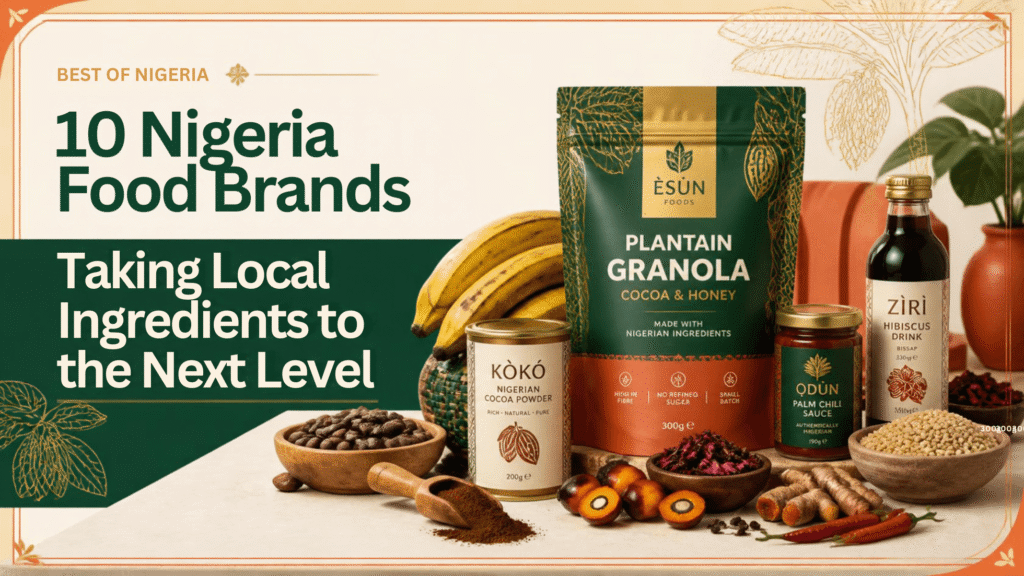
Nigeria does not have an ingredient problem.
We have cassava, plantain, yam, maize, millet, sorghum, beans, groundnuts, hibiscus, tiger nuts, palm products, peppers, spices, fruits, vegetables and countless regional ingredients that have fed generations.
The more interesting question is what we do with them.
A new generation of Nigerian food businesses is finding better ways to turn familiar ingredients into products people can buy, store, gift, export and incorporate into modern lifestyles.
Some are creating convenient cooking products from traditional ingredients. Others are turning cassava into packaged foods, groundnuts into modern breakfast products, local peppers into premium condiments or native rice into instant meals.
The result is a food industry that increasingly looks beyond simply preserving Nigerian food traditions. It is finding new commercial possibilities inside them.
Here are 10 Nigerian food brands worth knowing.
1. Àjàrà Foods, Making Nigerian Cooking Easier
One of the biggest opportunities in Nigerian food is not inventing new ingredients. It is making familiar ingredients more convenient.
That is exactly where Àjàrà Foods comes in.
Founded by Dolapo Daramola in 2025, the brand started with three products designed to reduce the preparation time involved in Nigerian cooking. Its range includes cooking bases, pepper mixes, chilli products and prepared palm oil.
The idea came from a very Nigerian problem: cooking can be enjoyable, but the preparation before the actual cooking can be exhausting.
Washing peppers. Blending. Grinding. Preparing ingredients. Cleaning everything afterwards.
Àjàrà turns some of that work into ready-to-use products while retaining the flavours associated with Nigerian home cooking.
Within its first year, the business had expanded to six products, established its own production space, secured NAFDAC certification for four products and reached customers in Nigeria and abroad.
What makes Àjàrà interesting is the balance between traditional food and modern convenience.
The ingredients are familiar. The format is what is changing.
2. Òtásánsán, Turning Pepper Into a Premium Condiment
Pepper is fundamental to Nigerian cooking, but Òtásánsán is approaching it from a different angle.
The brand’s chilli oil is rooted in Yoruba flavour traditions and is designed as a finishing condiment rather than simply another cooking ingredient.
Drizzle it over rice, swallow, noodles, eggs, grilled meat or fried plantain. It can also be stirred into soup or used as a dipping sauce.
That flexibility is important.
Instead of treating Nigerian pepper simply as something that disappears into a pot, Òtásánsán makes it a product that can sit on the dining table alongside other modern condiments.
The brand was launched in 2025 by Ayomide Logo after she noticed how strongly Nigerians, particularly those living away from home—missed the bold flavours they grew up with. Even the name, Òtásánsán, comes from Yoruba and means “good aroma.”
It is a simple example of how a familiar Nigerian flavour can become a distinct packaged product.
3. Chumbys Rice, Putting Native Rice in a Modern Format
Rice is one of Nigeria’s most familiar staples, but Chumbys is doing something different with it: making native rice faster and easier to prepare.
Chumbys Instant Rice is designed to be ready in about 15 minutes with boiling water. Its current range includes Native Rice, Coconut Rice and Jollof Rice Mix, alongside ready-to-eat meals.
The brand’s approach is particularly interesting because it addresses a modern consumer problem without abandoning familiar flavours.
Someone may want native rice but may not have the time or the confidence to prepare it from scratch.
Chumbys effectively asks:
What if traditional Nigerian meals could have the convenience of instant food?
That is a powerful proposition in a market where convenience is becoming increasingly important.
The brand also says its instant rice uses naturally grown and sourced ingredients and is processed and packaged to meet local and international regulatory standards.
4. Signature Snacks Global, Making Nigerian Crops Into Better Snacks
Snacking is another area where Nigerian ingredients have plenty of room for reinvention.
Signature Snacks Global, founded by Christina Akinrinde in 2022, built its business around nutritious snacks while developing direct relationships with local farmers.
The company now operates as a structured food-processing business with NAFDAC, SON and FDA certifications across five product lines. It also maintains direct crop off-take relationships with farmers.
That connection to agriculture is important.
A food brand can buy ingredients anonymously from the market, put them into a packet and sell them.
Or it can become part of a larger value chain.
Signature Snacks is taking the second approach, linking its products to farmers, women-led employment and skills development. SMEDAN reports that more than 80 percent of its workforce is women and that more than 130 young people have gone through training connected to the business.
The product is therefore only one part of the story.
The bigger story is what happens between the farm and the snack packet.
5. G-Delite, Reimagining Groundnuts and Indigenous Ingredients
Groundnuts are hardly an exotic Nigerian ingredient.
They are sold in markets, eaten as snacks and used in countless traditional food combinations.
G-Delite is asking what else they can become.
The brand’s products include groundnut-based breakfast porridges and snacks, with products such as G-Delite Classic made entirely from whole groundnuts and G-Delite Bliss combining groundnuts and dates.
The Bliss product, for example, is positioned as a protein- and fibre-rich breakfast product with groundnuts and dates providing its ingredients and natural sweetness.
That is a different way of looking at indigenous ingredients.
Instead of marketing groundnuts primarily as an old-fashioned snack, the brand places them inside the modern breakfast and wellness conversation.
Recent Nigerian food commentary has highlighted this broader shift: entrepreneurs are increasingly experimenting with familiar indigenous ingredients rather than treating them as outdated or merely traditional.
6. Okin Group Africa, Building a Business Around Cassava
If there is one Nigerian crop that demonstrates how much more value can be created from local ingredients, it may be cassava.
Okin Group Africa is building an integrated cassava-processing business around locally grown cassava, connecting farming, processing and consumer products.
Its current portfolio includes garri, bread, chinchin, biscuits, cookies, cassava flakes, high-quality cassava flour and cassava starch.
One of its consumer products is Okin Special Bread, made using high-quality cassava flour. The company also produces cassava biscuits, cookies and chinchin.
The interesting part is not simply that the products contain cassava.
It is the value chain.
Okin says it sources cassava from Nigerian farmers, including women farmers, and mechanically processes the crop into multiple food and industrial products. It also converts cassava peels into livestock feed rather than treating them simply as waste.
That is what taking a local ingredient to the next level looks like at an industrial scale:
one crop → multiple products → multiple markets.
7. Mummy Rose, Turning Familiar Nigerian Flavours Into Pantry Products
Mummy Rose takes some of the ingredients Nigerians already know and packages them for modern kitchens.
Its current range includes suya spice made with roasted groundnut, signature jollof seasoning, hibiscus and ginger infusion, tigernut breakfast cereal, moringa and lemongrass tea, coconut chinchin and peppered groundnuts.
The interesting part is the breadth.
Hibiscus becomes a tea infusion.
Tiger nut becomes a breakfast cereal.
Groundnut becomes both a spice component and a snack.
Traditional flavours are being moved from the open market and home kitchen into a more structured packaged-food environment.
The brand says it works with farming cooperatives and processes and mills ingredients in controlled batches.
That model reflects a broader opportunity for Nigerian food businesses: preserve the ingredient while changing the format.
8. Simoyo Natures, Bringing Zobo, Beans and Pepper Into the Modern Pantry
Simoyo Natures is another example of a Nigerian food business working with ingredients that are already deeply familiar.
Its product range includes roselle zobo tea, beans flour and pepper mix.
Its roselle product uses sun-dried roselle petals, turning the ingredient behind one of Nigeria’s most familiar drinks into a packaged tea product. The company positions its products around natural ingredients and Nigerian food traditions.
This kind of product development matters because it creates more commercial uses for ingredients that Nigerians already grow and consume.
Zobo does not have to exist only as a drink prepared at home.
Beans do not have to mean spending hours sorting and processing beans before cooking.
Pepper does not have to begin and end with the local market.
Packaging, processing and convenience can create new markets around old ingredients.
9. Togenda Foods, Taking Nigerian Staples Beyond the Kitchen
Togenda Foods is building a packaged-food business around grains, spices, flours and other Nigerian staples.
The Abuja-based company says it works directly with local farmers and processes traditional foods using modern methods while aiming to preserve their natural flavour and nutritional qualities.
Its portfolio includes more than 20 products across flours, spices, snacks and staples, with distribution across Nigeria and customers in Canada and the United Kingdom.
The international element is worth paying attention to.
The Nigerian diaspora represents a natural market for products made from familiar ingredients. But the opportunity goes beyond nostalgia.
A properly packaged Nigerian food product can become a pantry product for anyone interested in African cooking, not only Nigerians.
That is the difference between selling an ingredient from Nigeria and building a Nigerian food brand.
10. FoodCo’s Sunfresh, Local Manufacturing at Consumer Scale
FoodCo is better known as a retailer, but its manufacturing operation is an important part of the company’s story.
The company produces Sunfresh bread, Sunfresh ice cream and Sunfresh Premium Water. Its manufacturing operations currently include multiple bread and ice cream variants.
FoodCo’s story is especially relevant because of its roots.
The business began in 1982 as a small fresh-foods store in Bodija, Ibadan, before growing into a major South-West Nigerian retail and consumer-goods business.
Its supplier model also connects the retailer to Nigerian SMEs and farmers. FoodCo says it deliberately works with small businesses and local industry and provides market access to suppliers.
FoodCo demonstrates another side of the local-food opportunity.
Not every Nigerian food success story has to be a tiny artisan brand.
Local food businesses can also build manufacturing capacity and distribution at scale.
The Bigger Opportunity in Nigerian Ingredients
The most exciting thing happening in Nigerian food may not be the discovery of new ingredients.
It is the commercial reinvention of ingredients we already have.
Cassava can become flour, bread, biscuits, cookies, chinchin and industrial starch.
Groundnuts can become breakfast foods, snacks, spreads and seasonings.
Hibiscus can become tea.
Tiger nuts can become breakfast products.
Peppers can become premium condiments.
Native rice can become an instant meal.
Traditional cooking bases can become convenient packaged products.
That changes the economics of food.
Instead of selling raw agricultural products at relatively low margins, Nigerian businesses can create additional value through processing, packaging, branding, distribution and product development.
From Farm Produce to Consumer Brand
There is also a bigger question about how Nigerian food gets presented to the world.
For a long time, the country’s agricultural story was largely about what Nigeria grows.
The next stage should be about what Nigeria makes from what it grows.
That means moving from:
Cassava → raw crop
to:
Cassava → flour → bread → biscuits → export product.
Or from:
Hibiscus → dried flower
to:
Hibiscus → tea → packaged wellness product → international retail.
Or:
Pepper → market ingredient
to:
Pepper → branded condiment → Nigerian export product.
That is where food manufacturing becomes more than feeding the domestic market.
It becomes a way of building Nigerian brands that can travel.
Why This Matters
Nigeria has a huge consumer market, a deep food culture and an enormous agricultural base.
The missing piece has often been the bridge between those things.
The brands on this list are examples of businesses building that bridge in different ways.
Some are focused on convenience.
Some are focused on health.
Some are focused on traditional flavour.
Some are building agricultural value chains.
Others are turning familiar Nigerian foods into products that fit modern lifestyles.
None of these approaches requires Nigerian ingredients to become something they are not.
The opportunity is to make them better packaged, easier to use, more consistent, more accessible and more desirable.
And that may be the most important shift of all.
Nigeria does not need to invent new ingredients to build a globally interesting food industry.
It needs to become much better at turning the ingredients it already has into products people want to buy.
The ingredients are already here. The next big opportunity is what we build from them.
