15 Nigerian Fashion Brands Making Waves at Home and Abroad
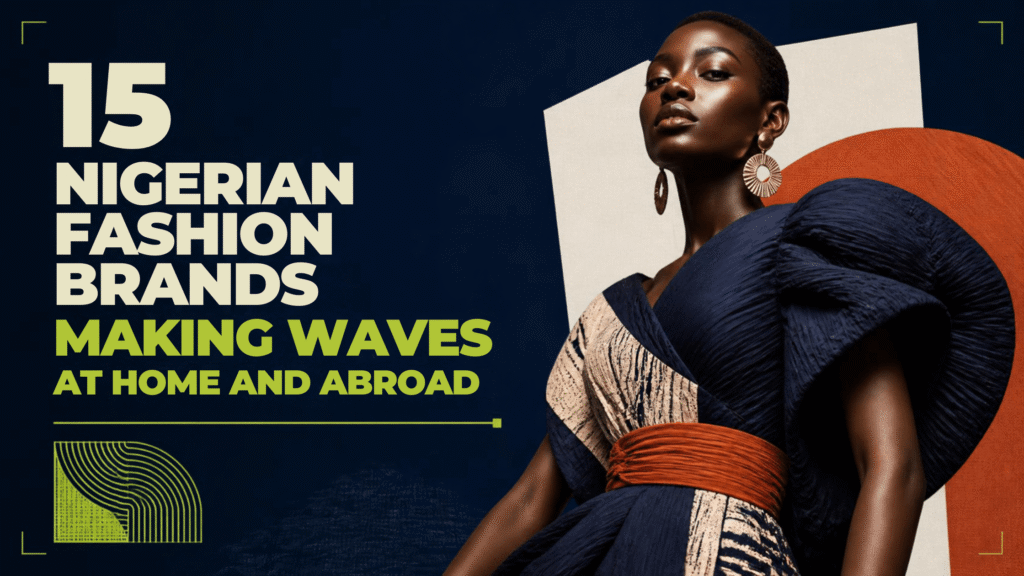
Nigerian fashion is no longer something the rest of the world encounters only through Ankara, agbada or red-carpet moments. A new generation of Nigerian designers is building brands with distinct identities, stronger international ambitions and increasingly sophisticated approaches to craftsmanship, storytelling and retail.
The momentum is visible at home. Lagos Fashion Week’s 2025 programme featured more than 60 designers and included established names alongside younger labels working across contemporary fashion, sustainability and cultural storytelling.
It is also visible beyond Nigeria. Nigerian designers are showing in cities such as London, Copenhagen and Berlin, while Nigerian labels are finding international customers and using traditional Nigerian textiles and craftsmanship in increasingly global ways.
These 15 brands are not presented as a ranking. They are a selection of Nigerian fashion labels worth knowing in 2026 because of their creative direction, cultural perspective, craftsmanship, business development or growing international presence.
1. Orange Culture
Few Nigerian fashion brands have pushed the boundaries of contemporary menswear quite like Orange Culture.
Founded by Adebayo Oke-Lawal, the Lagos-based label has built its identity around contemporary African fashion, bold colour, tailoring and questions around masculinity and self-expression.
Its international positioning has also become increasingly clear. Berlin Fashion Week describes Orange Culture as a brand sitting at the intersection of craftsmanship, activism and modern luxury, while its collections continue to explore identity and African cultural history.
The brand’s longevity is another part of its story. After more than a decade, Orange Culture remains a recognisable name in conversations about Nigerian fashion and its place on the global stage. Vogue noted in 2025 that Oke-Lawal was approaching the brand’s 15th anniversary while preparing its Spring/Summer 2026 collection.
2. Lisa Folawiyo
Lisa Folawiyo has spent two decades demonstrating how Nigerian textiles can become luxury fashion without losing their cultural identity.
Founded in Lagos in 2005, the brand is particularly known for transforming fabrics such as Ankara and Akwete through hand embellishment, intricate beadwork and contemporary tailoring.
That combination has helped the label develop a presence well beyond Nigeria. Its international journey has included presentations in major fashion cities and relationships with international retailers and fashion platforms.
What makes Lisa Folawiyo particularly interesting is the way the brand treats Nigerian textile traditions not as historical references, but as material for contemporary luxury.
3. Andrea Iyamah
Andrea Iyamah has built a fashion identity around colour, travel, nature and African cultural influences.
Founded in 2011 by Nigerian designer Andrea Dumebi Iyamah, the brand initially became particularly known for its resortwear and swimwear before expanding its wider fashion offering.
The label’s design language is easy to recognise: strong colours, confident silhouettes, modern femininity and references to African heritage. The brand describes its goal as creating African-owned fashion that remains internationally accessible.
That balance between Nigerian identity and international appeal is central to why Andrea Iyamah has become one of the better-known names associated with contemporary African fashion.
4. Banke Kuku
Banke Kuku has built a distinctive world around colour, prints and storytelling.
The Lagos-based designer has developed a signature visual language that draws on Nigerian culture while translating it into contemporary clothing and accessories.
In 2026, the brand reached another international milestone with its debut at Milan Fashion Week in a digital presentation. Vogue Italia’s September 2026 profile described Banke Kuku as a Lagos designer who sees fashion as a means of documenting history.
The brand also currently offers international shipping, with its Summer ’26 collection available to customers outside Nigeria.
For Banke Kuku, the opportunity is not simply to export Nigerian prints. It is to build a fashion language that can travel.
5. Kenneth Ize
Kenneth Ize has become closely associated with one of Nigeria’s most recognisable traditional textiles: aso oke.
His work takes the handwoven Yoruba textile and places it within contemporary tailoring and modern silhouettes.
That approach was evident in his Fall 2026 collection in Berlin, where Vogue highlighted the designer’s use of vibrant Nigerian aso oke alongside contemporary tailoring.
Berlin Fashion Week similarly describes Ize’s work as a contemporary reinterpretation of traditional West African textiles, particularly aso oke.
The result is fashion that can communicate its Nigerian origins without looking trapped in a traditional-fashion category.
6. Iamisigo
Iamisigo, founded by Nigerian designer Bubu Ogisi, occupies an unusual space between fashion, art, craft and cultural research.
The Lagos-based label has built a reputation for experimental pieces and a strong emphasis on African craftsmanship.
Its international trajectory has accelerated in recent years. Iamisigo made its Copenhagen Fashion Week debut after receiving Zalando’s Visionary Award, and by 2026 it had continued presenting collections internationally.
Its Spring 2026 presentation in Lagos demonstrated how much the brand’s approach has evolved. Ogisi worked with artisans across several African countries, combining handcrafted garments with objects and accessories that blurred the boundary between fashion and art.
Iamisigo is a useful example of a Nigerian brand competing internationally without abandoning its emphasis on craft and cultural research.
7. ATAFO
ATAFO, formerly known as Mai Atafo, is one of Nigeria’s most established names in luxury tailoring.
The brand operates across menswear, womenswear and bridal fashion, with bespoke tailoring remaining an important part of its identity.
ATAFO’s own description emphasises clean cuts, precise fit and craftsmanship, while Lagos Fashion Week identifies it as one of Africa’s foremost fashion labels.
The brand’s international clientele and appearances at fashion events outside Nigeria demonstrate how Nigerian tailoring can compete in a luxury market where craftsmanship and fit are central to the product.
8. Ejiro Amos Tafiri
Ejiro Amos Tafiri has built its identity around modern womenswear informed by African dress forms and indigenous textiles.
Founded in 2010, the Lagos-based brand is particularly associated with draping, intricate construction and an elegant approach to contemporary African fashion.
The company has also developed beyond clothing. Its wider ecosystem includes a diffusion line and a fashion school, giving the brand an educational and industry-development dimension.
In 2026, the label marked 15 years in business with its SS26 “Odyssey” collection, reflecting its continuing evolution.
Its collections have also been presented across Africa and Europe, reinforcing the brand’s international orientation.
9. Onalaja
Onalaja is one of the Nigerian labels that has made a particularly visible push into the international fashion conversation.
Founded by Nigerian designer Kanyinsola Onalaja, the brand is known for highly embellished, expressive pieces and what British Vogue describes as “disco glam.”
In September 2026, Onalaja made its London Fashion Week debut after the designer had lost her studio and years of work in a fire just months earlier.
The brand’s approach also places considerable emphasis on inclusivity. Its clothing is offered across an unusually broad size range, reflecting Onalaja’s stated aim of creating luxury pieces for women who have historically been underserved by the category.
10. Fruché
Fruché is a Lagos-based label founded by Frank Aghuno that combines Nigerian heritage, artisanal techniques and contemporary design.
The brand has increasingly attracted international attention for its approach to storytelling and craftsmanship. Berlin Fashion Week describes Fruché as a brand rooted in identity, heritage and intentional production, while its 2026 collection draws heavily on family, memory and Nigerian cultural references.
The label’s international momentum also grew in 2026 through its selection for Berlin Contemporary’s SS27 programme.
Fruché shows how a relatively young Nigerian brand can use heritage as a starting point for contemporary rather than nostalgic fashion.
11. Dimeji Ilori
Dimeji Ilori describes itself as a Lagos-based sustainable fashion house combining Afrocentric heritage with modern elegance.
The brand draws inspiration from pre-colonial African heritage, artefacts, spirituality and craftsmanship, translating those references into contemporary garments and accessories.
Its current collections include pieces made with handwoven heritage fabrics and locally sourced artisan work.
In a 2026 interview, Ilori described fashion as a form of cultural archiving and storytelling.
That philosophy gives the brand a clear point of view: clothing becomes a way of engaging with Nigerian and African history rather than simply decorating contemporary garments with African motifs.
12. Oríré
Oríré represents another direction within Nigerian contemporary fashion: smaller-scale, conscious production.
Established in 2021, the Lagos-based label focuses on artistic femininity, artisanal craftsmanship and responsible production.
The brand says much of its clothing is produced in small batches or made to order, helping reduce excess inventory while giving customers greater flexibility. It also works with local tailors and fabric suppliers.
Oríré is part of a broader generation of Nigerian fashion businesses thinking about sustainability not simply as a marketing term, but as a question of how clothing is actually produced.
13. Oshobor
Based in Benin City, Oshobor brings a perspective that is sometimes missing from conversations dominated by Lagos.
Founded by Oshobor Odion Peter, the indigenous slow-fashion brand draws heavily from Edo heritage, personal stories and questions around masculinity and emotion.
The brand attracted international attention with its Spring 2026 collection, which Vogue described as a modern and commercial interpretation of African fashion. The collection also incorporated an upcycled styrofoam sculptural dress and had elements previously shown in Paris.
Oshobor demonstrates that Nigerian fashion’s next wave does not have to come exclusively from Lagos and that sustainability and cultural storytelling can exist alongside ambitious design.
14. Tiffany Amber
Tiffany Amber is one of the foundational names in modern Nigerian fashion.
Founded by Folake Coker in 1998, the Lagos fashion house was an early pioneer of Nigerian ready-to-wear and became one of the country’s most internationally recognised fashion labels.
Lagos Fashion Week records that the brand presented at New York Fashion Week and became the first African-based fashion designer to showcase twice at the event in 2008.
Its importance is therefore not only about what the brand sells today. Tiffany Amber forms part of the history that made it easier for later Nigerian designers to imagine international fashion careers from Lagos.
15. E.S.O by Liman
E.S.O by Liman is part of the newer generation of Nigerian fashion labels appearing prominently within Lagos Fashion Week’s ecosystem.
The brand was among the labels featured during Lagos Fashion Week’s 2025 programme, where it appeared alongside established and emerging designers.
Its inclusion here represents an important part of the Nigerian fashion story: the industry is not being driven only by names that have been around for decades. Newer labels are entering the ecosystem with their own aesthetics, audiences and ambitions.
That constant arrival of new creative voices is one of the reasons Nigerian fashion remains so dynamic.
What Makes Nigerian Fashion Different?
The most interesting thing about Nigerian fashion in 2026 may not be any single designer.
It is the range of approaches now coming out of the country.
One brand may work primarily with aso oke. Another may build collections around experimental craft. Another may focus on luxury tailoring, while another approaches fashion through sustainability, street culture, resortwear or contemporary womenswear.
There is also a growing willingness to treat Nigerian heritage as a source of innovation rather than simply something to preserve.
Lagos Fashion Week’s 2025 programme reflected that breadth, with designers working across sustainability, contemporary design, streetwear, indigenous craft and international collaborations.
International visibility is growing alongside that creative diversity. Nigerian labels are appearing in Copenhagen, London, Berlin and other global fashion spaces, while brands such as Lisa Folawiyo and Andrea Iyamah have spent years developing international customer bases.
But perhaps the biggest change is that Nigerian fashion increasingly has its own language.
These brands are not simply asking the world to buy “African fashion.”
They are creating individual brands with distinct aesthetics, business models and points of view and allowing Nigerian culture, craftsmanship and experience to become part of that global conversation.
