10 Nigerian Fashion Trends Shaping Modern Style
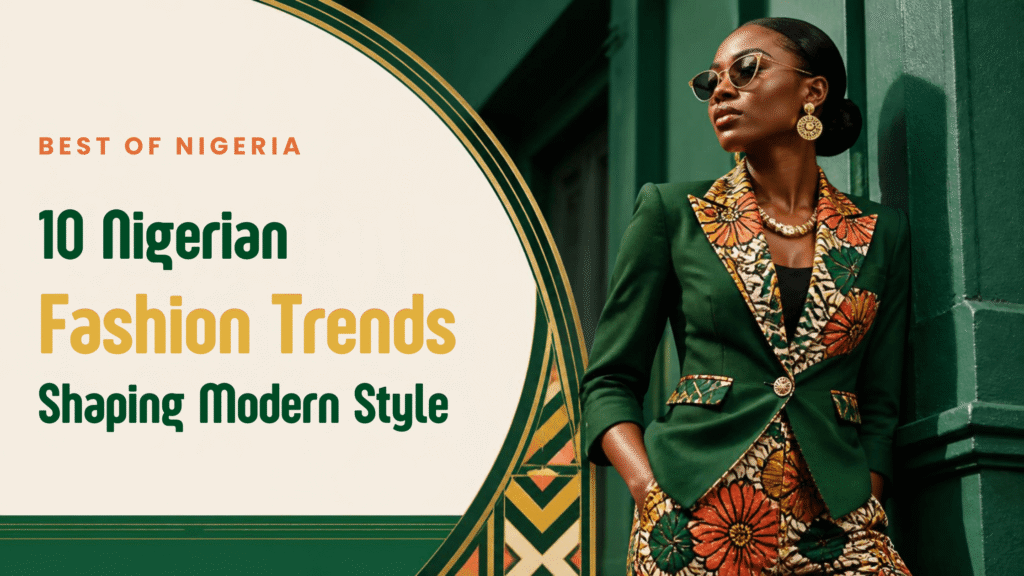
Nigerian fashion has never been afraid of making an entrance.
From the elaborate creativity of aso ebi and the craftsmanship of aso-oke to Lagos streetwear, contemporary tailoring and small-batch ready-to-wear labels, Nigerian style has always been about more than simply getting dressed. It is a way of communicating identity, status, creativity, culture and, increasingly, individuality.
What is changing is how these elements are being combined.
Traditional fabrics are appearing in silhouettes that would not have looked out of place on an international runway. Streetwear is finding space alongside established designers. Handcrafted techniques such as crochet and intricate weaving are being treated as premium design features. At the same time, Nigerian designers are paying greater attention to sustainability, local materials, comfort and clothes that can actually be worn beyond the runway.
Recent editions of Lagos Fashion Week have captured this shift particularly well. Coverage of the 2025 edition highlighted crochet, tie-dye, fringe, silk and aso-oke, while other reporting pointed to a stronger emphasis on wearability, comfort and culturally rooted design.
Here are 10 trends helping shape modern Nigerian style.
1. Aso-Oke Is Moving Beyond Ceremony
Aso-oke has long been associated with weddings, traditional celebrations and other important occasions. But Nigerian designers are increasingly treating the handwoven textile as a material for contemporary fashion rather than something reserved for ceremonial dressing.
At Lagos Fashion Week 2025, designers incorporated aso-oke into modern dresses and two-piece sets, showing how the traditionally formal fabric can work in less conventional silhouettes.
That transition matters because it changes the role of heritage textiles in everyday fashion.
Instead of using aso-oke simply as a symbol of tradition, designers can manipulate its texture, colour and structure to create modern jackets, skirts, dresses, trousers, bags and accessories.
The renewed interest is also part of a wider conversation around preserving Nigerian textile traditions. Recent reporting has highlighted growing interest in vintage aso-oke, including efforts to preserve and reinterpret older handwoven pieces for contemporary audiences.
The result is a style that can feel deeply Nigerian without looking old-fashioned.
2. Adire and Tie-Dye Are Getting a Contemporary Makeover
Adire has always had a strong connection to Nigerian textile culture, particularly among Yoruba communities in southwestern Nigeria. But contemporary designers are finding new ways to use its visual language.
The tie-dye trend seen at Lagos Fashion Week 2025 was less about traditional-looking fabric and more about turning dye patterns into bold design statements. Designers experimented with stronger colours, structured garments and more polished silhouettes.
That distinction is important.
Modern Nigerian fashion is not necessarily abandoning traditional techniques. It is changing how those techniques are presented.
An adire fabric can now become a relaxed shirt, oversized jacket, flowing dress, wide-leg trousers or coordinated set. The technique provides the cultural foundation while the cut gives it a contemporary identity.
This is one reason Nigerian textiles increasingly work across different wardrobes and generations.
3. Crochet Is Becoming a Serious Fashion Statement
Crochet is hardly new to Nigeria, but its place within contemporary fashion is changing.
At Lagos Fashion Week 2025, crochet appeared prominently across dresses, skirts, tops and coordinated pieces. The technique brought texture and craftsmanship to collections while also working particularly well for Nigeria’s warm climate.
What makes the trend interesting is the tension between craftsmanship and modern styling.
Crochet can look relaxed and casual when used for a simple top or beach piece. It can also become highly sophisticated when combined with structured silhouettes, detailed construction or premium styling.
For Nigerian consumers, it also fits naturally into the growing appetite for pieces that feel handmade rather than mass-produced.
That makes crochet more than a seasonal aesthetic. It reflects a wider appreciation for visible craftsmanship.
4. Fringe and Movement Are Bringing Drama Back
Fashion does not always have to be quiet.
Fringe became one of the noticeable details on the Lagos Fashion Week 2025 runways, appearing on dresses, skirts, tops and other pieces. The effect was immediate: garments moved with the wearer rather than simply sitting on the body.
This works particularly well within Nigerian occasion dressing, where movement, texture and visual impact have always mattered.
But modern designers are adapting the idea for more contemporary wardrobes.
Instead of covering an entire garment in embellishment, fringe can be used selectively around a sleeve, hem, neckline or panel. The result is dramatic without necessarily becoming overwhelming.
It also fits the broader Nigerian appetite for clothes that photograph well, an increasingly important consideration in a fashion culture heavily connected to social media.
5. Fluid Silhouettes Are Replacing Rigid Dressing
One of the more noticeable shifts in contemporary Nigerian fashion is the movement towards clothing that allows the body to move.
Flowing dresses, wide-leg trousers, relaxed shirts, loose outerwear and softer silhouettes are becoming increasingly prominent. Lagos Fashion Week coverage has specifically highlighted flowing silk gowns, breathable fabrics and minimalist silhouettes alongside more expressive designs.
This is partly practical.
Nigeria’s climate makes restrictive clothing uncomfortable for much of the year. But it is also a change in how modern luxury is being interpreted.
Luxury does not always have to mean heavily embellished clothing or an extremely structured silhouette. A beautifully cut flowing garment in an excellent fabric can communicate the same sense of refinement with considerably less visual noise.
The growing popularity of relaxed silhouettes also makes Nigerian fashion easier to incorporate into everyday wardrobes.
6. Streetwear Is Becoming Part of the Main Fashion Conversation
For a long time, Nigerian streetwear existed largely alongside the formal fashion establishment.
That boundary is becoming less clear.
At Lagos Fashion Week 2025, Street Souk brought a group of streetwear designers onto the official runway, marking a significant return of streetwear representation at the event.
The significance goes beyond one runway.
Nigeria’s younger consumers increasingly mix sneakers with traditional fabrics, oversized shirts with tailored trousers, graphic pieces with luxury accessories and casual separates with formal garments.
This creates a distinctly Nigerian approach to street style: less concerned with fitting neatly into one fashion category and more interested in combining different influences.
The modern Nigerian wardrobe can therefore move from a traditional event to a creative workspace, dinner or concert without completely changing its personality.
7. Traditional Craft Is Being Treated as Modern Luxury
Perhaps one of the most important developments in Nigerian fashion is the growing appreciation for the work behind the garment.
Handweaving, embroidery, beadwork, crochet, dyeing and other labour-intensive techniques are increasingly being presented as valuable design elements rather than simply traditional crafts.
Lagos Fashion Week has placed increasing emphasis on craftsmanship and sustainability, while its Woven Threads platform continues to explore circular design, material innovation and locally rooted approaches to fashion production. The 2026 edition was themed “CRAFTED.”
This creates an interesting alternative to the idea that modern fashion must always mean industrial production.
For Nigerian designers, craft can become a competitive advantage.
A garment that carries visible evidence of human skill has a story that a generic mass-produced item does not.
That story is becoming increasingly valuable to consumers who want their clothes to feel distinctive.
8. Sustainability Is Moving From Conversation to Design Practice
Sustainability is becoming harder to treat as simply a marketing word within Nigerian fashion.
Designers are experimenting with recycled materials, textile waste, local fibres, upcycling and slower production models.
Nkwo Onwuka’s work provides a notable example. Her Dakala textile is made using a technique developed to recycle textile waste, and her Lagos Spring 2026 collection included pieces made from upcycled materials, including old hotel bedding.
Meanwhile, Lagos Fashion Week’s sustainability initiatives have continued to focus on building more responsible fashion systems and supporting local materials and fibres.
For Nigeria, this trend has particular relevance.
A fashion industry built around local skills, textile recovery, small-scale production and longer-lasting garments can potentially create value beyond the finished clothing itself.
It can support artisans, tailors, textile producers and other parts of the fashion ecosystem while reducing waste.
9. Gender-Fluid Fashion Is Expanding the Wardrobe
The boundaries between traditionally masculine and feminine fashion are becoming less rigid.
Oversized shirts, relaxed trousers, matching sets, flowing garments, jewellery and unconventional silhouettes are increasingly being styled according to personal preference rather than strict gender rules.
Lagos Fashion Week has also been recognised for creating space for gender-fluid fashion alongside sustainability and contemporary African design.
The trend does not mean every Nigerian is abandoning traditional approaches to dressing.
Rather, it reflects a broader expansion of choice.
A designer can create a silhouette that is worn by different people in different ways. Consumers can also interpret the same garment according to their personality rather than a predetermined category.
That flexibility is increasingly important to younger fashion audiences.
10. Nigerian Fashion Is Becoming More Wearable
Perhaps the biggest trend of all is that Nigerian fashion is becoming increasingly interested in the space between runway creativity and everyday life.
The 2025 Lagos Fashion Week was notable for its emphasis on wearability, culture and comfort, with designers showing pieces that could move beyond the runway into real wardrobes.
That does not mean Nigerian fashion is becoming less ambitious.
It means ambition is increasingly being expressed through clothes people can actually live in.
A beautifully cut pair of trousers. An oversized shirt made from locally inspired fabric. An aso-oke jacket. A flowing silk dress. An adire co-ord. A carefully constructed crochet top.
These pieces can be fashionable without requiring a special occasion.
And that may be one of the clearest signs of how the Nigerian fashion industry is maturing: creativity is increasingly being combined with functionality.
The New Nigerian Style Is a Conversation Between Past and Present
Modern Nigerian fashion is not replacing tradition with something new.
It is constantly remixing what already exists.
Aso-oke can become streetwear. Adire can become contemporary tailoring. Crochet can become luxury fashion. Traditional craft can become a selling point for a global audience. Local textile techniques can coexist with international silhouettes.
At the same time, Nigerian designers are experimenting with sustainability, gender-fluid dressing, relaxed silhouettes and more wearable collections.
That combination is what makes the country’s fashion scene particularly interesting.
The future of Nigerian style may not belong to one particular fabric, colour or silhouette. It may belong to the ability to take something recognisably Nigerian and reinterpret it in a way that feels completely relevant to the present.
And that is exactly what modern fashion should do.
